Softball Christian Cross SVG: A Designer’s Review
When I first opened the preview for Softball Christian Cross Svg, Jesus Svg, I immediately felt that blend of gritty athletic spirit and quiet faith that so many softball families carry. It’s not every day a design manages to put a cross, a softball, and a verse like “Let the field be joyful” into one cohesive mark without feeling forced. As a designer who regularly turns digital files into finished embroidery pieces, I’m not just looking at a pretty graphic—I’m already imagining how it stitches, how it washes, and whether a customer would pick it up at a craft fair and smile.
The mood here is warm, affirming, and proudly team-spirited. The cross shapes the foundation, and the softball elements weave through it, giving it motion. The phrase “Let the field be joyful” from Psalm 96:12 sits like a quiet reminder, and the “Cheer Mom” tag tugs at the heart of anyone who’s ever sat in the bleachers. Evaluating this as a machine embroidery design means looking past the vector prettiness and asking the hard questions: will it read well in thread, hold up on a cap, and make a small shop product look professionally finished?
First Impressions: Faith and Softball in One Design
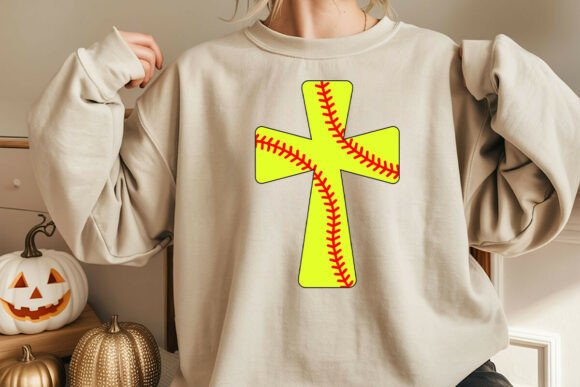
The composition of Softball Christian Cross Svg, Jesus Svg is bold but not overwhelming. The cross is the central anchor, and the curved lines that mimic softball seams bring a sporty rhythm without making the design too busy. The typography, likely a mix of script and sans-serif, has a gentle confidence—it’s spiritual without being preachy, and athletic without being aggressive. For an embroidery project, this is crucial. Overly intricate details can turn into a muddy mess of thread, but this design’s shapes look like they can translate into clean satin stitch and well-placed fill stitch sections.
I always check whether a design can hold its own when simplified. In my mind, I strip away the digital preview’s gradients and shadows (which don’t matter in embroidery) and focus on the core silhouette. The cross and ball motif remain strong. The text “Let the field be joyful” is a bit long, so I immediately start thinking about scaling and small lettering. That’s a practical flag I’ll address later, but as a first impression, the design feels intentional—like it was made for someone who wants to wear their faith on their sleeve, literally.
Real-Life Project: A Custom Tote for a Cheer Mom
Let me set the scene. A client reaches out—she wants a personalized embroidered tote bag for her daughter’s softball coach, who is also a devoted church member. She saw the Softball Christian Cross Svg, Jesus Svg online and loves the message. The bag will be used at tournaments, carrying snacks, scorebooks, and maybe a Bible. I’m looking at the design and picturing it stitched on a sturdy cotton canvas tote in a deep navy blue.
Right away, I test the visual in my head: a white or gold thread would pop beautifully against navy, and the cross would feel crisp. The “Let the field be joyful” text would need to be large enough to read, so I’d likely place the design on the center of the bag with a generous 6x10 inch hoop. The tote’s fabric is stable, which is forgiving, but I’d still use a medium-weight cutaway stabilizer to keep the stitches from sinking into the weave. That’s the kind of real-use thinking that separates a digital file that looks good on screen from a finished product that feels good in hand.
This design would also work beautifully on a unisex sweatshirt. I can already see it on a heathered gray crewneck, with the cross and text in a soft athletic gold thread. The “Cheer Mom” element gives it a personal identity, and that’s the kind of custom apparel that sells well in small boutiques and Etsy shops. For a tote, it’s a practical gift that blends utility and meaning. The design’s message is universal enough for a wide audience but specific enough to feel like it was made just for them.
How the Design Performs on Different Products
I always evaluate a digital design like this across multiple product categories. Softball Christian Cross Svg, Jesus Svg has a versatile shape that can adapt to many surfaces, but some are trickier than others. Here’s my honest breakdown:
- Tote bags and pillow covers: Ideal. The flat surface and stable fabric give plenty of room for the design to breathe. The cross and text can be stitched at a size that keeps all details crisp.
- Sweatshirts and t-shirts: Very good, especially on the back of a crewneck or a left chest placement scaled down. Stretchy fabric requires a no-show mesh stabilizer and possibly a basting spray to keep things aligned.
- Baby onesies and toddler tees: Sweet but watch the text size. Babies’ clothing is small, and the entire design might need to be simplified or split into a front pocket and back placement. The cross alone could be a lovely appliqué design for a tiny romper.
- Caps and hats: Challenging. The curved surface and center seam can distort the cross. I’d place it on the back of a cap or use a patch version. The text, especially “Let the field be joyful,” would likely be too small for a cap front unless digitized with a very fine running stitch.
- Patches: Excellent. This design screams for a custom embroidered patch with a merrowed border. It would look fantastic on a denim jacket or a softball bag, and it’s a great product for a small shop.
- Kitchen towels and aprons: Surprisingly lovely. The design’s message of joy fits a kitchen or grill apron, especially for a softball family hosting a cookout. I’d use a lighter weight stabilizer and a soft cotton thread for a tactile, homespun feel.
For a printable mockup or digital product preview, the design is a strong asset. The SVG format in the ZIP file gives you the flexibility to create clean listing images for your Etsy shop or craft business. But in embroidery, the real test is the thread on fabric.
Stitching Considerations: What to Test Before You Commit
I never trust a design fully until I’ve run a test stitch on scrap fabric. With Softball Christian Cross Svg, Jesus Svg, I’d do a few critical checks before offering it to a client or listing it in my shop.
First, the text. “Let the field be joyful” is a beautiful sentiment, but embroidery hates tiny letters. If the overall design is smaller than 4 inches wide, those letters could turn into illegible blobs. I’d test the design at the smallest hoop size I plan to use—maybe 4x4 inches—and see if the text reads clearly. If not, I’d consider splitting the design: stitch the cross and softball motif on the front, and embroider the verse separately on the back or sleeve. That’s a practical workaround that keeps the product looking professional.
Second, thread color contrast. The design looks great in a preview, but thread colors can fool you. I’d test it on light fabric, dark fabric, and even a heathered fabric. A white thread on a pale pink background might wash out, while a metallic gold thread on a dark gray sweatshirt could be stunning. I’d also test how the design looks in a black-and-white mockup, which tells me if the shapes hold up when all color is stripped away. That’s important for commercial embroidery where you may need to adapt to different thread inventories.
Third, stitch density. The cross itself has bold lines that will likely need a satin stitch, but the softball seams might be better as a simple running stitch or a lighter fill. Too dense a stitch on a thin fabric like a lightweight tee can cause puckering. I’d digitize the design with a balanced density—dense enough to look full, but not so heavy that it stiffens the fabric like a board. A good test on a cotton scrap with a proper cutaway stabilizer reveals all of this.
Finally, I’d pay attention to the small details. The design has some fine curves where the softball stitching meets the cross. If those get too narrow, the embroidery machine might chew up the fabric. I’d digitize with a slight pull compensation and maybe a very subtle underlay to keep the satin stitch edges clean. It’s these little adjustments that transform a digital file into a finished product that makes a customer say, “Wow, this is so well made.”
The Business Angle: Selling Products with This Design
For craft business owners, Softball Christian Cross Svg, Jesus Svg is a niche gem. Christian softball families are a tight-knit community, and a design that merges their faith with their sport feels personal and thoughtful. If you’re an Etsy seller, you can offer this on a range of personalized items: monogrammed tote bags, custom hoodies, embroidered patches, or even framed hoop art for a nursery or playroom. The “Cheer Mom” wording opens up a gift market that spikes around Mother’s Day, tournament season, and end-of-season celebrations.
I’d caution anyone selling finished products to check the commercial license before listing. The product description says there are separate files for some features, so you need to review what’s included in the ZIP file and whether the license permits physical item sales. The design comes as a cut file for Cricut, PNG, PDF, vector, and stencil, which means it’s versatile. But for embroidery, you’ll need to convert it into a machine embroidery file. If you’re not a digitizer, you may need to hire someone. That’s an extra step, but the design’s popularity as a Christian softball graphic makes it worth the effort.
The visual appeal of the design directly impacts product value. A well-stitched version of this cross on a canvas tote elevates a simple bag into a heartfelt gift. Customers notice the crisp letters, the even satin stitch, and the way the design holds up after washing. That builds trust and repeat sales. The design’s recognition factor—people see it and immediately know it’s about softball and faith—helps your brand feel consistent and thoughtful. It’s the kind of image that prompts a “Where did you get that?” moment, which is the best marketing for a small shop.
Final Thoughts for Embroidery Designers
After spending time with Softball Christian Cross Svg, Jesus Svg from a purely practical, hands-on perspective, I’m confident it has strong potential for real embroidery projects. It’s not a plug-and-play design—you need to respect the text size, choose the right stabilizer, and test on your fabric. But that’s true for any digital embroidery file. What sets this apart is its emotional resonance. It speaks to a specific person: a softball mom who prays before every game, a player who finds strength in her faith, a coach who leads with love. That emotional thread is what makes a handmade product feel priceless.
My advice is simple. Test on scrap fabric first. Check how the text looks at 4 inches and 8 inches. Experiment with thread colors—maybe a soft rose gold for the “Cheer Mom” and a deep navy for the cross. Use a quality stabilizer, and don’t rush the digitizing. Confirm the license terms so you can sell finished items with peace of mind. And if you’re creating a product for a craft fair table, this design on a tote bag, a pillow cover, or a unisex tee will stop shoppers in their tracks. It’s a design asset that blends faith, sport, and a whole lot of joyful noise.