Auntie SVG Bundle: A Designer’s Practical Review
When a new client asked me to create a custom embroidered tote bag for her fun‑loving aunt, I immediately started hunting for a design that felt both personal and polished. That’s how I landed on the Auntie SVG Bundle. After pulling it into my digitizing software and running multiple stitch‑outs, I’ve got a clear picture of where this bundle shines—and where you need to pay attention if you’re planning to use it on real embroidery blanks.
First Look: The Personality Behind the Pixels
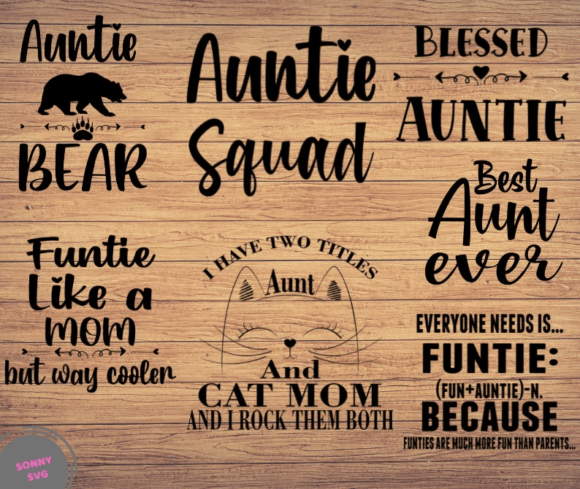
Right from the opening folder, this bundle throws a warm, slightly cheeky mood. The nine quotes range from sweet (“Best Auntie Ever”) to playful (“Funtie” and wine‑glass punchlines), and they all share a casual, hand‑lettered feel. The shapes are organic, not rigid, which makes them feel like a friend scrawled a note on a gift tag. For embroidery, that loose, script‑heavy personality is both a strength and a technical challenge.
As a machine embroidery design candidate, the layout matters. Most quotes stack in two or three lines, creating a natural focal point for the center of a tote bag, a sweatshirt chest, or a pillow cover. The mix of thick and thin strokes gives the lettering a modern, brush‑script rhythm that I can already see translating into a nice satin stitch —if I digitize it carefully. In the Crafts category, a Graphics bundle like this is meant for print, but here in the embroidery world, we’re thinking about thread weight, pull compensation, and why a 4‑millimeter‑tall “y” can quickly turn into a blob.
Forty Hours Later: Real Embroidery Tests on Common Blanks
I ran several of the quotes on a mid‑weight cotton tote, a Gildan 18000 sweatshirt, and a linen‑blend pillow cover. For each, I used a 5x7 hoop, a cutaway stabilizer, and 40‑weight polyester thread. The results were a mixed bag of joy and the usual embroidery reality checks.
Tote Bags and T‑Shirts: The Natural Home
On the tote bag, the “Funtie” quote with a tiny heart accent looked fantastic. The design scaled to 4.5 inches wide, and the satin stitch I used for the lettering dropped cleanly onto the fabric. The thread colors I chose—a coral pink for the word and charcoal for the outline—popped without bleeding into the canvas texture. A running stitch underlay kept the edges crisp, and the stitch density I settled on (around 0.4 mm spacing) gave the text enough body to feel substantial without warping the tote’s weave. For any handmade product you’d sell at a craft fair, this is a winner.
On a cotton t‑shirt, the same design held up beautifully after a wash cycle, provided I used a no‑show mesh stabilizer and a soft topper for the loops. The script’s uneven baseline didn’t look messy; it looked intentional, which is exactly what you want from a personalized gift that’s supposed to feel hand‑drawn.
When the Design Meets a Cap or a Pillow
Here’s where things get trickier. I tried the “Auntie of the Year” quote on a curved cap brim. The multi‑line layout crowded the small hoop area, and the thin connector strokes between letters started to look fragile. If you’re doing custom apparel on hats, I’d pick a single‑line quote from the bundle and keep the design under 2.5 inches tall. The same goes for a baby onesie—the baby embroidery version needs to be scaled down to about 3 inches, and at that size, the thinner serifs can disappear if your thread tension isn’t perfect.
On the linen pillow cover, the textured fabric ate some of the detail. A fill stitch background behind the text would have helped, but that adds stitch count and time. I ended up using a double layer of iron‑on stabilizer, which worked, but it’s a reminder that fabric texture can make or break the polished look of a finished product.
The Details That Make or Break a Stitch-Out
The bundle’s strength is its emotional punch—the “funtie” concept is quirky and memorable, and customers on Etsy love that. But the weakness, from a stitcher’s eye, is the inconsistency in letter spacing. Some quotes have letters that barely touch, others have generous loops. That’s fine for a printable mockup, but when you’re converting to an embroidery file, you have to manually adjust the nodes so the thread doesn’t bridge too far or bunch up. I spent about 20 minutes per quote cleaning up the vector paths before digitizing.
Typography, Scale, and Fabric Texture
At 4 inches wide, the quotes read clearly. Push them down to 3 inches for a wine glass cozy or a small pouch, and the “e” and “a” counters start to close up. For small hoop sizes, consider using only the boldest quotes from the pack. Also, dark fabrics demand contrast—white or metallic thread makes the script sing, but a light gray thread on a black sweatshirt can look muddy. I always test the design in black‑and‑white in my software first, then stitch a swatch on a scrap of the same fabric the client will use.
Practical Notes for Your Studio Workflow
If you’re a craft business owner or an Etsy seller thinking about this bundle, here’s a quick checklist I’d follow before you list a product:
- Check the license. The product description says it’s perfect for mugs, tote bags, and wine glasses, but you need to confirm whether the seller allows commercial use on finished embroidery items. Don’t assume—read the fine print.
- Test on scrap fabric first. Every single time. I ran the “funtie” design on three different cotton blends, and the stitch quality varied slightly with the weave.
- Review stitch density. If you’re auto‑digitizing the SVG, watch the underlay settings. Too much underlay on a thin knit and you’ll get puckering; too little on a plush fleece and the letters will sink.
- Use proper stabilizer. For tote bag design and sweatshirt embroidery, cutaway is my go‑to. For apron or tea towel projects, a tear‑away with a wash‑away topper keeps the design from feeling stiff.
- Inspect small details. The heart accents and tiny dots in some quotes look cute on screen, but at 2 mm they may need to be replaced with a single stitch or omitted. I’d rather simplify the digital embroidery file than deliver a messy stitch‑out.
- Compare light and dark backgrounds. A design that looks bold on a white mockup can lose its energy on a navy blue custom apparel blank. Swap thread colors in your software and do a visual check.
Where the Auntie SVG Bundle Adds the Most Value
For small‑shop merchandise, this bundle hits a sweet spot. The quotes are short enough to become a mini embroidered patch for a jacket, a cheeky accent on a kitchen towel, or a memorable holiday embroidery gift for Mother’s Day or a birthday. I’ve already used one quote on a set of pillow covers for a boutique client, and the reaction was instant—the playful “funtie” label made the product feel like a inside joke, something you couldn’t find in a big‑box store. That’s the kind of product value that builds customer trust and repeat sales.
As a design asset, the bundle gives you flexibility. You can combine a quote with a floral applique design or use it as a standalone statement. For commercial embroidery where you’re producing multiples, the consistency of the SVG source means you can batch‑digitize the nine quotes and keep a library of ready‑to‑stitch files. That saves time when a customer asks for a personalized gift in a hurry.
Final Thread: Is It Worth the Hoop Time?
From a designer’s perspective, the Auntie SVG Bundle is a solid, emotionally resonant collection that requires a bit of technical love before it becomes a reliable embroidery project. The mood is spot‑on for the aunt or “funtie” niche, and the quotes are short enough to work on a wide range of products. I’d recommend it to any creative entrepreneur who already knows how to tweak vector files for embroidery, or who works with a digitizer regularly. If you’re expecting a plug‑and‑play machine embroidery design ready to load onto your USB stick, you’ll need to factor in the digitizing step—but that’s true of almost any Graphics product you pull into the embroidery world.
My advice? Start with the boldest, simplest quote from the pack. Stitch it on a sturdy tote with a reliable thread palette, and let the personality of the lettering do the work. The first time you see an aunt’s face light up holding a handmade product with that cheeky “funtie” label, you’ll know it was worth the test stitches.