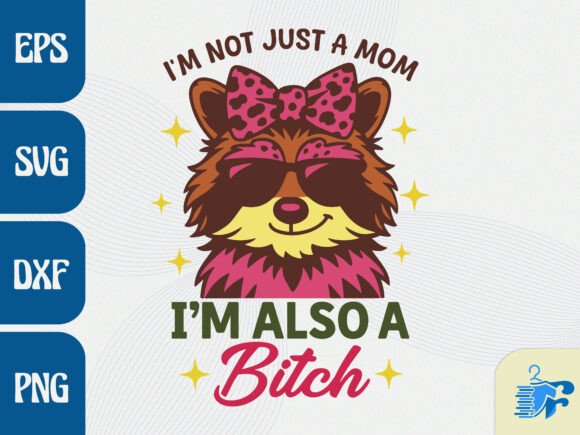
I M NOT JUST a MOM I M ALSO a B tch
First Impressions: A Design That Owns Its Sass
When I first pulled up I M NOT JUST a MOM I M ALSO a B tch, I smiled. It’s not subtle. It’s not sweet. It’s the kind of design that walks into a room and dares you to react. The typography feels conversational, almost like a handwritten note scribbled in a moment of exhausted honesty. That raw, unpolished personality is exactly what makes it work for certain handmade products. The rhythm of the words has a natural flow, but the spacing and letter shapes will need a careful eye during digitizing. I could already picture it stitched across the back of a denim jacket or centered on a canvas tote bag. There’s a sharp contrast between the softness of “mom” and the bite of the last word, which makes the whole thing land with a laugh. It’s not a design for everyone, and that’s the point.
Where This Design Shines in Real Embroidery Projects
I imagine this graphic turned into an embroidery file on a few very specific products. A sweatshirt with the design in a clean satin stitch across the chest would be a top seller at a boutique. A tote bag with the phrase running down one side feels like a perfect gift for a mom friend who won’t be offended. I’d also consider a pillow cover for a mom’s craft room or a tea towel with a dark, moody thread color. The design has enough attitude to carry a simple product without needing extra decoration. Because it’s a graphic file—SVG, DXF, PNG, and EPS—you’re not locked into one craft. You can use it for printable mockups, screen printing, or as a base for a custom embroidery digitizing request. For my own embroidery projects, I’d probably stitch it on a ball cap or a patch with a vintage wash. The key is to match the boldness of the words with a product that feels equally confident.
The Tricky Side: When the Sassy Lettering Fights Back
I’m going to be honest—this is not a design you toss onto a tiny hoop and call it done. Every embroidery designer knows that lettering with tight curves, casual baseline shifts, and mixed-downletter shapes can turn into a muddy mess if the stitch density isn’t right. The phrase “I M NOT JUST a MOM” has a lot of short words, which means many stop-and-start points. The last word is the focal point, and if the rounding is too sharp, the satin stitches might pull or pucker on unstable fabric. I’d avoid using this on highly textured fabric like terry cloth or thin knits that shift under the needle. Small hoop sizes are a real challenge here—the lettering could easily become illegible below two inches in height. If you’re aiming for a baby onesie or a slim cap front, you’ll need to simplify. I’d also be cautious with dark fabric and light thread; any tiny registration mistake will stand out like a spotlight.
Making It Work: My Pre-Stitch Checklist for This Design
Before I ever hoop up fabric, I run through a few non-negotiables. Here’s how I’d approach I M NOT JUST a MOM I M ALSO a B tch as a real embroidery project:
- Test on scrap fabric first. I always stitch a sample on a similar weight and color to the final product. It saves me from cursing later.
- Check thread color contrast. A dark gray or deep burgundy on a soft heather tee looks intentional and moody. Bright pink on white might read too loud for this phrase.
- Review stitch density. If you’re digitizing this yourself, don’t let the lettering get too dense. The casual feel of the design relies on a bit of breathing room, not a bulletproof cover.
- Confirm hoop size. I’d plan for at least a 4x4 hoop for a chest print, but bigger is better. The design needs space to preserve the word spacing.
- Inspect small details in black and white. If the layout loses punctuation or the gap between “a” and “B tch” closes up, it’s a red flag. I’d run a printout and hold it at arm’s length.
- Use proper stabilizer. For apparel, a cutaway stabilizer is the bare minimum. For a tote bag, I’d add a second layer to prevent the fabric from waving.
These aren’t just tips—they’re the difference between a product that looks handmade and one that looks homemade. The graphic itself is clean in the PNG and SVG files, but the translation to thread is where the designer’s judgment really matters.
From Craft Fair to Etsy: Selling Finished Products with Confidence
I’ve sold enough embroidered goods to know that a phrase like this has a strong buyer magnet. It’s not for the school bake sale crowd, but it’s perfect for a small shop owner who wants to stand out. A set of personalized gifts—maybe a tote bag and a matching zipper pouch—would catch fire at a holiday market. The wording is playful, not mean, which makes it giftable. When I think about listing this on Etsy, I’d photograph the finished embroidery on a soft, oatmeal-colored crewneck and pair it with a simple linen background. The product value comes from the unapologetic humor, and the stitching quality has to back that up. A buyer will pay extra for crisp lettering and a professional finish. I’d also be clear about the fact that the original design is a graphic file; I’m selling the embroidered finished product, not the digital file itself. Licensing is crucial here—always check whether the original file allows commercial use of physical items you make with it. The ZIP folder provides versatile formats, but the commercial embroidery rights are a separate question.
Design Personality: Who’s Buying This and Why?
You’re not going to stitch this for a grandmother who asks for a blessing. The buyer is someone who laughs at the chaos of motherhood and wants a little edge. I’ve seen similar designs do well as embroidered patches on denim jackets, add-on gifts for a bachelorette party, or inside joke items for a close-knit mom group. Brand consistency matters if you’re building a shop around this vibe. If your other products are delicate florals, this design will feel like a surprise thunderstorm. But if your shop already balances sweet with salty, it fits right in. The recognition factor is high—it’s a conversation starter, and that’s exactly what handmade products need in a crowded market.
Digitizing Notes for the Embroidery-Curious
Since this is a graphic design, not a ready-to-stitch embroidery file, someone has to build the stitch file. If you’re digitizing it yourself, watch the letter “t” crossings and the apostrophe. The hand-drawn feel of the SVG might tempt you to keep every tiny wobble, but too many nodes will inflate the stitch count. I’d aim for a clean satin stitch with minimal trims, and I’d widen the narrowest parts of the letters slightly so the thread doesn’t snap. The word “ALSO” is all caps, which breaks the flow in a nice way, but it needs consistent height. The PNG file with transparent background is a great reference for placement, and the EPS file gives you the vector control needed for perfect outlines. I’d also use the DXF for precise alignment if I’m combining this with other design elements.
Where to Use It—and Where to Hold Back
I can see this on a custom apron for a mom who runs a home bakery, or on a kitchen towel hanging in a galley kitchen. It’s a natural fit for a boutique product line that includes wine tumblers and matchboxes. But I’d avoid baby items entirely—the phrase is too sharp for anything nursery-related. Curved surfaces like caps will require careful placement; I’d center it on the front panel and accept that the curved baseline might need slight adjustment. Layered garments with zippers or seams near the embroidery area are a no-go. The design needs an uninterrupted canvas to read clearly. If you’re thinking about printable mockups, the PNG is perfect for creating a digital preview that looks legit, and it helps you sell the idea before you ever turn on your machine.
Real Talk: A Graphic That Earns Its Place
I’ve reviewed plenty of graphics and embroidery designs over the years, and I M NOT JUST a MOM I M ALSO a B tch is one of those files that makes you think about your customer before you even thread the needle. It’s not for every project, but when it lands in the right spot—a heavyweight sweatshirt, a sturdy canvas tote, a pillow with a hidden zipper—it turns a simple item into a statement. The file package included is generous for crafters: SVG for cutting, DXF for scaling, PNG for quick mockups, EPS for pro editing. For embroidery, the real work is in the digitizing and the stitch-out. If you respect the attitude of the design and test it properly, you’ll have a product that people pick up, laugh at, and immediately imagine giving to a friend who needs a laugh. That’s the kind of handmade product that sells itself.