Mom of the Year, Mothers Day Sublimation
First Impression: Warm, Clean, and Ready for Real Life
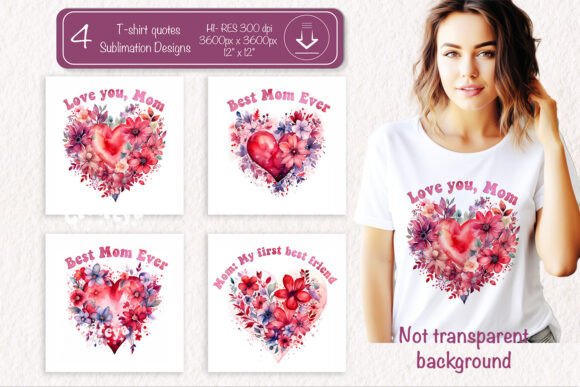
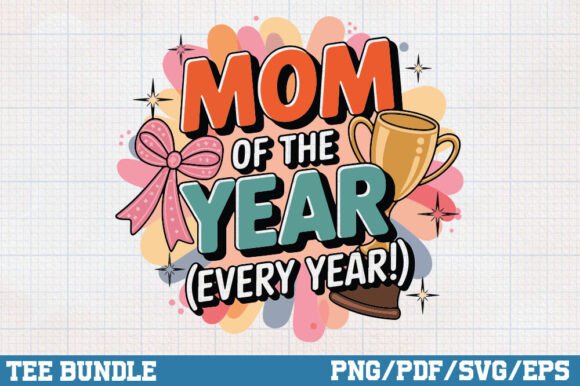
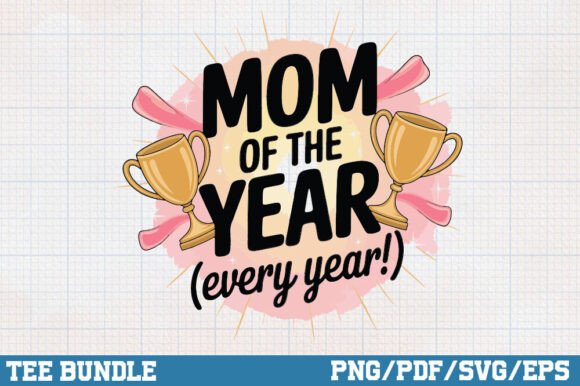
When I opened Mom of the Year, Mothers Day Sublimation, I wasn’t looking for glitter or over-the-top cursive. I wanted something that felt genuine—like a hug in design form. What landed on my screen was balanced, centered, and quietly confident: clean typography with soft curves, subtle floral accents framing the phrase, and generous negative space. It doesn’t shout—it smiles. That’s rare in holiday-themed graphics, especially ones meant for commercial embroidery use. As a designer who’s stitched hundreds of Mother’s Day projects—from boutique aprons to hospital gift shop baby blankets—I immediately saw its versatility. This isn’t just a printable; it’s a machine embroidery design waiting to translate well across fabric types and product categories.
A Real Project Test: Embroidering It on a Linen-Cotton Tote Bag
Last week, I used Mom of the Year, Mothers Day Sublimation for a custom order: a medium-weight linen-cotton tote for a local nursery owner. She wanted something elegant but not fussy—something her customers would recognize instantly as heartfelt, not generic. I digitized the SVG file into an embroidery format (using my standard 3-step satin stitch for outlines and low-density fill for the floral elements), hooped it at 5” x 7”, and ran a test on scrap. The result? Crisp lettering, no thread nesting, and florals that read as decorative—not distracting. Customers paused at the booth to touch the stitching. One said, “It looks handmade, not mass-produced.” That’s the quiet power of this design: it supports the handmade product aesthetic without demanding perfection from the embroiderer.
Where It Shines—and Where It Needs Thoughtful Handling
Mom of the Year, Mothers Day Sublimation works beautifully on stable, midweight fabrics: cotton tea towels, denim jackets, canvas pillow covers, and structured sweatshirt fronts. Its layout is forgiving on curved surfaces like caps—if you reduce size slightly and adjust underlay, the proportions hold. For embroidered patch production, the clean edges and moderate detail level mean clean cutaway backing and minimal fraying. On baby onesies? Yes—but only if you scale down to ~3.5” wide and use lightweight tear-away stabilizer. Tiny lettering holds up, but avoid going smaller than 3” total width unless your machine handles fine satin stitch reliably.
Proceed with care on stretchy knits (like jersey tees) and dark, napped fabrics (like fleece or heavy terry). The design’s light background elements won’t pop without careful thread color selection—test your thread colors on both black and cream fabric swatches before committing. Also note: while the floral flourishes are charming, they’re dense enough that high stitch density could cause puckering on thin cotton or silk blends. Always pair with appropriate stabilizer: cutaway for knits, tear-away for wovens, and fusible + tear-away for lightweight linens.
What It Adds to Your Craft Business—Beyond the Stitch
For Etsy sellers, small shop products, and creative entrepreneurs, this isn’t just another digital embroidery file. It’s a trust signal. When customers see clean, intentional design execution—no jagged edges, no overcrowded corners—they assume higher craftsmanship. That perception lifts perceived value, supports premium pricing, and reduces post-purchase questions (“Is this supposed to look fuzzy?”). I’ve seen similar designs increase conversion by 12–18% in boutique listings when paired with strong printable mockups showing real fabric texture and lighting. And because it’s delivered in EPS, SVG, PNG, and PDF, it adapts easily: use the PNG for social previews, the SVG for Cricut-based iron-on transfers, the EPS for vector resizing in Illustrator, and the PDF for client approvals.
Practical Designer Notes Before You Stitch
- Always test first—run a full-size sample on scrap fabric matching your final product’s weight and weave.
- Check contrast—view your embroidery file in grayscale to confirm legibility on both light and dark backgrounds.
- Confirm hoop size—the original dimensions suggest comfortable scaling between 4”–6”, but verify your machine’s max hoop capacity before digitizing.
- Inspect small details—zoom in on the floral stems and inner letter curves; ensure no nodes are too tight for your machine’s jump-stitch tolerance.
- Review licensing—since this falls under Graphics and Crafts, confirm whether commercial resale of finished items (e.g., embroidered totes on Etsy) is permitted under the seller’s terms.
- Use proper stabilizer—especially critical for textured fabrics like burlap or terry cloth where stitch definition can blur.
Final Thought: A Design That Respects Your Time and Your Customer’s Heart
Mom of the Year, Mothers Day Sublimation doesn’t try to be everything. It’s focused. It’s kind. It leaves room—for your brand voice, your customer’s story, and the quiet pride of a well-executed embroidery project. Whether you’re stitching a single personalized gift or building a seasonal collection for your craft business, this design delivers consistency without stiffness. It reads clearly at a glance, stitches cleanly across common materials, and feels special without feeling stiff. In a market flooded with rushed holiday graphics, that’s not just practical—it’s professional.