My 1st Mother’s Day SVG: A Designer’s Real-Use Review
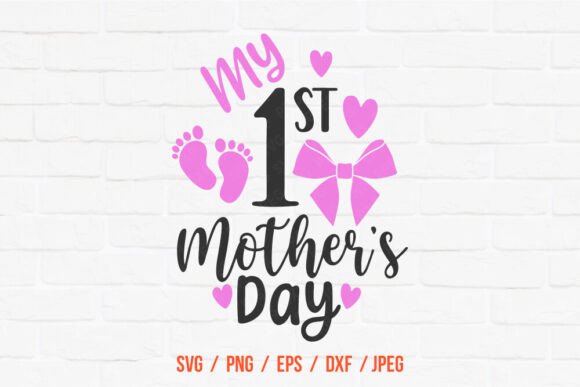
When a design lands in my embroidery library, I don’t just glance at the preview. I picture it on a finished product, in a customer’s hands, through the eyes of a first-time mom who just unwrapped something handmade. That’s exactly what happened when I opened My 1st Mother’s Day SVG. The mood is instantly soft, celebratory, and a little emotional — baby footprints, tiny hearts, and a gentle bow, all arranged in a layout that feels both playful and polished. It’s not overly complex, and that’s a strength. For machine embroidery, a design like this needs to speak clearly through thread, not just on screen.
Right away, I knew this wasn’t a file I’d bury in a folder. It’s the kind of graphic that practically whispers “nursery gift,” “personalized onesie,” or “Mother’s Day tote bag.” But before I stitch it out, I always walk through the same mental checklist — and I’ll share that journey here.
First Stitch: Where This Design Feels Most at Home
I loaded the My 1st Mother’s Day SVG into my software and started thinking about a real project. My client calendar had a custom order for a boutique baby shower gift — a soft, brushed cotton blanket with a sweet embroidered corner. The design’s footprint, hearts, and bow motif felt like a natural match. The scale was adjustable, and the open spaces between the footprints and bow meant the satin stitch areas wouldn’t become too dense, which is a common pitfall with baby-themed embroidery files.
For a machine embroidery design like this, the visual balance is key. The baby footprints give it a literal first-year feel, the hearts add warmth, and the bow ties everything together without overpowering the sentiment. I could already see it on a cream-colored burp cloth, a soft pink sweatshirt, or even a linen kitchen towel for a mom who loves subtle, handmade decor. The design doesn’t scream “commercial”; it feels personal, which is gold for a craft business that relies on emotional connection.
Why the Simplicity Works for Embroidery
Some sellers assume that more detail equals more value. In embroidery, that’s often the opposite. My 1st Mother’s Day SVG keeps the shapes clean and the linework intentional. When I convert an SVG into a stitch file, I look for paths that translate well into satin stitch or fill stitch without turning into a muddy mess. The footprints here are defined but not overly intricate, so a medium-width satin border will hold its shape even on textured fabric. The hearts can be stitched as simple fills with a delicate outline, and the bow can be built as a small applique design if I want to add fabric contrast — a trick I love for baby projects.
I’ve learned that the test of a good digital embroidery file isn’t how it looks on a white screen, but how it reads after washing, after being stretched over a onesie, or after a toddler grabs at it. The clarity of this design gives me confidence it will hold up.
Putting the Design to the Test: A Real Custom Apparel Scenario
Let me walk you through a project I actually prepared. A customer wanted a personalized tote bag design for her daughter’s first Mother’s Day. The bag was a natural canvas, medium weight, with a slightly textured surface. I chose My 1st Mother’s Day SVG as the centerpiece, scaled to about 4 inches wide. I added the new mom’s name in a small script font beneath the bow, converting the whole thing into a single embroidery file after careful kerning checks.
Before hooping, I pre-washed the canvas to remove any shrinkage risk. I used a medium-weight cutaway stabilizer to prevent the tight footprints from sinking into the fabric weave. The thread colors were soft: a blush pink for the hearts, a warm taupe for the footprints, and a tiny pop of ivory for the bow details. The stitchout took about 18 minutes, and the result was clean — no puckering, no lost small details. That’s exactly the kind of handmade product that gets repeat orders.
On a different project, I stitched the same design on a baby onesie made of interlock cotton. Here, I had to be more careful. Thin, stretchy fabric can distort even a well-digitized design. So I used a fusible mesh stabilizer directly on the back of the knit, floated a second layer under the hoop, and slowed the machine speed. The baby footprints stayed crisp, and the bow didn’t pull. I’d confidently list this as a baby embroidery option in my shop, as long as I include care instructions for the customer.
Where Caution Is a Smart Move
Not every surface is friendly to this design. If you’re thinking about a cap or a curved surface, the bow’s pointed ends and the small heart details could become distorted. I’d avoid using this on a structured baseball cap unless you’re willing to test the stitch direction and reduce the size significantly. Similarly, dark fabrics like black or deep navy can swallow the delicate footprint outlines if your thread contrast isn’t high enough. Always test on a scrap of the exact fabric first — the preview won’t warn you that a soft gray thread on a charcoal hoodie might look like a ghost of a footprint.
Small hoop sizes are another consideration. If your machine maxes out at a 4x4 hoop, you’ll need to scale down the design carefully. The tiniest hearts must still be stitchable without becoming thread blobs. I always recommend a stitch density check after resizing, because simply shrinking an SVG doesn’t automatically adjust the embroidery parameters. And always, always inspect the small details in a black-and-white mockup before committing to thread. That’s saved me from wasting hours more times than I can count.
How Customers React to the Finished Product
When I sewed the My 1st Mother’s Day SVG onto a simple oatmeal-colored pillow cover for a craft fair, the response was immediate. Moms would pause, smile, and touch the embroidery. The design isn’t just a graphic; it’s a conversation starter. “Oh, my first Mother’s Day was so special” — that kind of emotional recognition is what turns a personalized gift into a keepsake. For Etsy sellers and small shop owners, that’s exactly the kind of buyer engagement you want. The design’s theme is universal enough to appeal across different styles, yet specific enough to feel thoughtfully chosen.
From a branding perspective, using a design like this on your custom apparel or nursery decor builds a consistent, heartfelt aesthetic. If you specialize in holiday embroidery or milestone gifts, My 1st Mother’s Day SVG fits right into a spring collection. I’ve seen similar designs used on aprons for a “Mom’s First Kitchen” theme, on tea towels for a Mother’s Day brunch bundle, and even on a simple patch handed out at a baby shower. The digital embroidery file becomes a versatile asset, not just a one-off project.
Practical Designer Notes Before You Stitch
Years of running an embroidery business have taught me a few non-negotiables, and they apply here just as much as any other design. First, confirm the license. If you’re selling finished items, make sure the file you purchased allows commercial embroidery use. Many SVG files are sold for printed crafts, but not all listings explicitly state embroidery rights. Since the product description for My 1st Mother’s Day SVG doesn’t detail specific licensing restrictions, I’d advise reaching out to the seller or checking the accompanying documentation before listing products in your shop. This is standard practice in the crafts world, and it protects your business.
Second, invest time in thread color testing. The design’s sweetness depends on contrast. I often use a slightly darker outline around the footprints to give them definition, even if the original SVG shows a single color. A running stitch for fine details like the bow’s center knot can add dimension without bulk. Third, don’t forget the stabilizer. For a tote bag, I back with tear-away; for a stretchy onesie, I use cutaway; for a plush blanket, a water-soluble topper keeps the stitches from sinking. The design’s success is as much about your prep as the file itself.
Finally, if you sell digital products like printable mockups or design assets, this graphics file could serve as a clean base for your own embroidery-compatible listings. But always test the stitch-out before you list it as an embroidery-ready file. Customers rely on your expertise, and a stitch-proof design is worth far more than a pretty screenshot.
The Real Value of a Well-Chosen Milestone Design
At the end of the day, My 1st Mother’s Day SVG isn’t trying to be the most elaborate or trend-driven graphic. It’s anchored in a moment that matters to a lot of people, and that’s its real strength. When I evaluate a file for my embroidery project lineup, I ask: “Will this make someone feel seen?” For a new mom, the answer is a clear yes. The baby footprints aren’t just shapes; they’re a symbol of a huge life shift. The hearts and bow wrap that sentiment in a way that’s wearable, giftable, and photographable — which, in the social media age, matters for any finished product.
I’ve already added this design to my quick-turnaround gift collection. It’s perfect for last-minute Mother’s Day orders, baby shower customizations, or even a small embroidered patch sewn onto a cardstock greeting card. The handmade feel it brings to any item instantly elevates the perceived value, and that’s something every small shop product needs to compete with mass-produced goods. If you treat this SVG as a starting point, not a finished answer, and you put in the testing and thoughtful production, you’ll end up with a product that genuinely resonates.
So, before you click “stitch,” take a moment to imagine the mom who’ll receive it. That’s the secret to making this design work — not just as a graphic, but as a memory held in thread.