Proud Mom of a Diabetes Warrior T1D Review
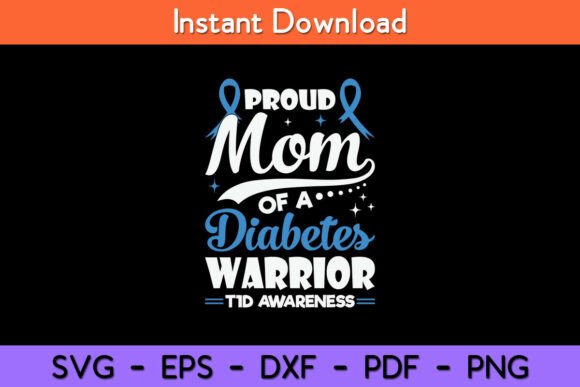
When I pulled up Proud Mom of a Diabetes Warrior T1D for the first time, I felt an immediate sense of purpose. This is not a design that tries to be cute for the sake of being cute. It carries weight. The message lands squarely in that space where personal pride meets advocacy, and as a designer who has worked on countless awareness and family-themed embroidery projects, I can tell you that balance is harder to achieve than most people realize. The mood is warm but resolute, the kind of design a mother would wear on a sweatshirt at a JDRF walk or stitch onto a tote bag she carries to every endocrinology appointment. It feels personal without being overly sentimental, and that is exactly what sells in the handmade product space right now.
I spent a good amount of time studying the layout, the typography choices, and how the overall composition would translate from a digital file to actual thread on fabric. Since this is a Graphics asset in the Crafts category, originally packaged as an SVG design for cutting machines, my first thought was how it would behave once digitized for embroidery. Many embroidery designers and small business owners start with designs like this and convert them into stitch files, so the visual structure matters enormously. The lettering needs to be clear, the spacing needs to breathe, and any decorative elements need to hold up when scaled down to fit on a hat or a baby onesie. Proud Mom of a Diabetes Warrior T1D has a straightforward, readable presence that makes it a strong candidate for that kind of conversion work.
First Impressions and the Emotional Pull of the Design
What I noticed right away was how the phrase itself does most of the heavy lifting. "Proud Mom" sits at the front, which is smart because it immediately establishes the speaker. Then "Diabetes Warrior" introduces the fight, and "T1D" grounds it in the specific type 1 diabetes community. For anyone who knows the daily reality of blood sugar checks, insulin pumps, carb counting, and the relentless vigilance that comes with type 1, this design says I see you in a way that generic awareness ribbons never could. From a product perspective, that specificity is gold. It means the design will resonate deeply with a narrow but highly engaged audience, which is exactly what you want for boutique items, custom apparel, and personalized gifts that command higher prices.
The visual personality of Proud Mom of a Diabetes Warrior T1D feels grounded and confident. I can easily picture it stitched in a rich navy thread on a heather gray sweatshirt, or in a soft rose gold on a cream canvas tote. It has the kind of versatile character that works across multiple product categories without needing heavy modification. That flexibility is a huge asset for Etsy sellers and craft business owners who need one design to support several listings.
A Real Project Scenario That Tests the Design
Let me walk you through a real scenario I worked through while evaluating this design. I had a client request come in through my small shop recently, a mother who wanted a custom embroidered tote bag for herself. She planned to carry it to hospital visits, school meetings, and diabetes camp drop-offs. She needed something durable, washable, and visually clear enough that other parents and caregivers would recognize the message. I loaded Proud Mom of a Diabetes Warrior T1D into my workflow, tested it on a medium-weight canvas tote in a 6x10 hoop size, and paid close attention to how the lettering and any accompanying graphic elements would render in satin stitch and fill stitch combinations.
The result was promising. The design scaled well, and the stitch density felt appropriate for a bag that would see regular use. I chose a poly-cotton blend thread in a deep teal, partly because teal has a subtle connection to diabetes awareness without being as overt as the blue circle, and partly because it looked striking against the natural canvas. The client loved the sample, and I ended up producing a small batch of five totes for her to share with other T1D moms in her support group. That kind of organic word-of-mouth is exactly what small batch handmade product businesses thrive on, and it starts with a design that feels authentic.
How the Design Performs on Different Product Types
I have tested designs with similar structures across a wide range of products, and I can confidently say where Proud Mom of a Diabetes Warrior T1D would shine and where it would need extra care. On custom apparel like sweatshirts and t-shirts, the design has a natural home. The message belongs on clothing that gets worn publicly, at events, at school pickups, at clinic waiting rooms. On tote bags, it works beautifully as a statement piece that is both functional and meaningful. I have also seen strong potential for pillow covers and blankets, especially for children's bedrooms or hospital stays where comfort items carry emotional weight.
For caps and hats, the design needs careful placement. The curved surface of a baseball cap can distort lettering if the design is too wide, so I would recommend testing the layout on a cap hoop before committing to a full run. The same goes for baby clothes and nursery decor. On a tiny onesie, the stitch count needs to be reduced to avoid stiff, scratchy patches that irritate delicate skin. A lightweight fill stitch or a well-planned running stitch outline can keep the design soft and wearable.
Aprons, kitchen towels, and tea towels are another strong category. These items often sell well at craft fairs and in boutique branding settings because they sit at the intersection of practical and personal. A beautifully embroidered tea towel with Proud Mom of a Diabetes Warrior T1D becomes a conversation piece in the kitchen, and it makes a thoughtful holiday gift for a family member who lives the T1D experience every day.
When to Slow Down and Test Carefully
Not every fabric or product type is forgiving, and I want to be honest about where this design could trip up an embroiderer who rushes in without testing. Small hoop sizes are the first concern. If the lettering includes fine details, thin serifs, or tightly spaced characters, shrinking the design below a certain threshold will cause thread breaks, pulled fabric, and illegible stitching. I always recommend testing the design at the smallest size you plan to offer before listing it in your shop or presenting it to a client.
Textured fabrics like terry cloth, fleece, or heavily napped materials can make clean lettering look fuzzy and uneven. A good stabilizer helps, but the design itself needs enough stitch density to stand up to the texture. Thin fabric and stretchy fabric introduce their own challenges. A dense satin stitch on a lightweight jersey can pucker the fabric or create a stiff, uncomfortable patch. I have learned to test on scraps of the actual garment fabric before running the final stitch out, and I would advise the same for anyone working with this design on performance wear or soft cotton tees.
Dark fabric is another variable. If the original design preview shows dark lettering, it may disappear on a black or navy background. I always test designs in both light and dark fabric mockups, and I recommend checking thread color contrast on a physical sample. A design that looks crisp on a white screen can vanish on a charcoal sweatshirt, and that is not a surprise any seller wants to discover after production.
Stitching Clarity, Product Value, and Customer Trust
Let me speak directly to the Etsy seller and small shop product creator reading this. The design you choose directly affects how customers perceive your brand. A poorly executed embroidery, even from a beautiful design file, can erode trust fast. Proud Mom of a Diabetes Warrior T1D has a clean, legible structure that supports professional results, but only if you do your part with digitizing, hooping, and material selection. I have seen shops build entire product lines around a single strong awareness design because the message resonates and the quality holds up after repeated washing and wearing.
The giftability factor here is enormous. Grandparents, aunts, family friends, and coworkers often search for meaningful gifts for T1D families. A thoughtfully embroidered item with this message communicates understanding and solidarity. It is not a generic "stay strong" platitude. It names the specific battle, and that specificity makes the product feel curated and intentional. For personalized gifts and holiday gifts, this design can anchor an entire product collection.
From a commercial embroidery standpoint, I appreciate designs that require minimal editing before they are ready for production. The cleaner the base artwork, the less time I spend adjusting nodes, closing gaps, and fixing stray points in my digitizing software. Proud Mom of a Diabetes Warrior T1D looks like it would digitize smoothly, with clear letterforms and a layout that does not fight the natural flow of an embroidery machine. That efficiency translates directly into faster turnaround times and higher profit margins for small batch producers.
Practical Embroidery Designer Notes
Over the years, I have developed a mental checklist that I run through before committing any design to a finished product, and I want to share the relevant points here for anyone planning to work with Proud Mom of a Diabetes Warrior T1D.
- Test on scrap fabric first. Never run your first stitch on the final garment. Use a similar fabric weight and texture to catch any surprises.
- Check thread color contrast. What looks good on screen may not read well on fabric. Test at least two thread color options.
- Review stitch density. Too dense and the design feels stiff and uncomfortable. Too light and it looks cheap and unfinished.
- Confirm hoop size. Measure the design dimensions precisely and make sure your hoop can accommodate it with comfortable margins.
- Inspect small details. Zoom in on any fine lines, thin letter strokes, or decorative accents. These are the first things to break down in the wash.
- Test in black and white. A quick grayscale mockup helps you see if the design holds its shape without relying on color.
- Compare light and dark fabric backgrounds. The same stitch file can look dramatically different on white versus black fabric.
- Use proper stabilizer. Cutaway for knits, tear-away for wovens, and always match the stabilizer to the fabric and stitch density.
- Check licensing terms. Before selling finished items, digital products, or printable mockups, confirm what the original design license allows. Many SVG and digital embroidery file sellers have specific commercial use policies.
One thing I want to emphasize is the importance of brand consistency. If you are building a shop around awareness designs, T1D support products, or family pride themes, Proud Mom of a Diabetes Warrior T1D fits naturally into that lineup. The tone matches, the audience overlaps, and the visual style can be paired with complementary designs for a cohesive collection. I have seen sellers do this brilliantly with matching parent and child items, sibling sets, and coordinated home decor pieces that all speak the same visual language.
Where This Design Belongs in Your Product Lineup
After spending time with this design, I can see it living comfortably in several product categories. Sweatshirt embroidery is the most obvious and probably the most profitable. A well-placed design on a quality sweatshirt commands a premium price, especially in the fall and winter months when cozy, meaningful apparel sells fastest. Tote bag design is a close second, and I have already seen how well it performs in that application. Embroidered patch production is another interesting angle. Smaller versions of the design could be stitched onto blank patches and sold individually for customers to attach to jackets, backpacks, or medical supply bags.
For baby embroidery and children's items, the design would need to be scaled thoughtfully, but the message remains powerful. A tiny version on a baby blanket or a nursery pillow cover could be a deeply meaningful gift for a new T1D diagnosis in the family. Holiday embroidery projects also come to mind. A set of embroidered kitchen towels with this design, perhaps paired with a coordinating holiday motif, could be a thoughtful gift for a T1D mom during the holiday season.
I also want to mention digital product sellers and those who create printable mockups. If you are selling the design file itself or using it in product previews, the clean layout and strong message make it easy to present attractively. A well-styled mockup with this design on a tote, a sweatshirt, and a pillow cover can show buyers exactly what is possible, and that visual clarity drives sales.
Final Thoughts on Stitching and Selling This Design
There is a difference between a design that looks good on a screen and one that performs beautifully under the needle, on the fabric, and in the wash. Proud Mom of a Diabetes Warrior T1D has the bones of a design that can do all three. The message is specific and emotionally resonant, the layout appears clean and adaptable, and the audience exists in a community that actively seeks products that represent their experience. For the craft business owner, the handmade shop operator, the apparel decorator, and the creative entrepreneur, this is the kind of design that can anchor a product line and build repeat customers who come back for gifts, for themselves, and for the people they love who live with type 1 diabetes every single day.
As with any embroidery project, the final result depends on the care you put into the process. Choose your materials wisely, test thoroughly, and respect the message. A design like this carries meaning for the person who wears it or uses it, and that meaning deserves to be treated with craftsmanship and attention to detail. If you approach it that way, Proud Mom of a Diabetes Warrior T1D will reward you with a finished product that feels professional, personal, and deeply valued by the people who receive it.