Sassy Skull Mom 20oz Tumbler Wrap Review
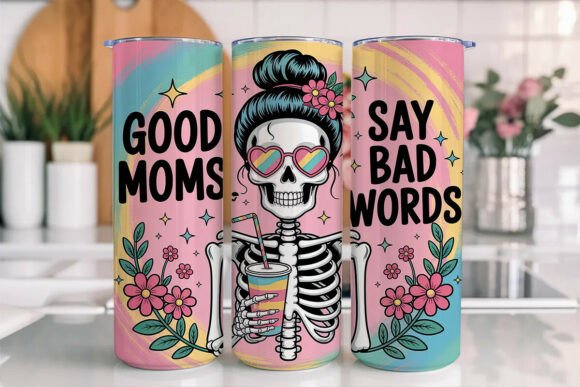
A custom tote bag order landed on my desk last week—someone wanted a bold, slightly irreverent “mom” design that could survive coffee spills, playground chaos, and still look sharp. The request immediately made me think of the Sassy Skull Mom 20oz Tumbler Wrap I had bookmarked a while back. It wasn’t an embroidery file, but a crisp 300 DPI printable graphic. For a digitizer, that’s often the starting point for a standout machine embroidery design. I decided to treat it like a real project asset and see how it would translate from screen to stitch.
What Hit Me First: Attitude in a Single Frame
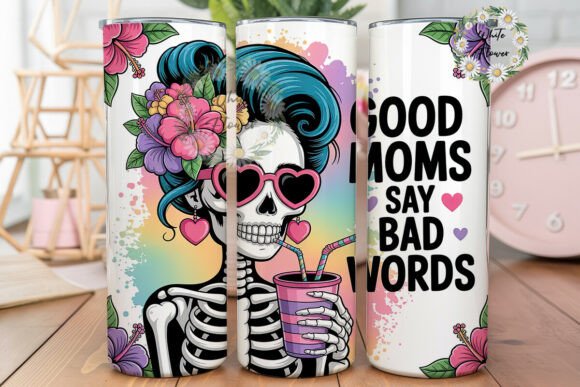
The design has a mood that’s part rockabilly, part modern mom humor. A stylized skull sits front and center, softened just enough by floral or bow accents to keep it from feeling too heavy. The word “Mom” or a similar text element (depending on the exact file variant) is integrated into the composition, not slapped on as an afterthought. That’s important for embroidery—when text and imagery compete, the finished stitchout can look crowded. Here, the layout feels intentional, and the 93 x 82 mm target size for a 20oz tumbler creates a natural focal point. As a digital embroidery file candidate, the visual weight is strong: dark decorative lines, well-placed negative space, and a silhouette that reads instantly even from a few feet away. That instant readability is gold for handmade product appeal.
I immediately imagined it on a black canvas tote, stitched in a single-color thread like antique white or soft silver, with maybe a hint of blush pink for the bow. The non-seamless nature of the graphic isn’t a flaw here—this is a standalone statement piece, not a repeating pattern. For a custom apparel item or an embroidered patch, that self-contained composition is exactly what you want.
Where a Skull Mom Design Truly Belongs
While the original file is labeled as a tumbler wrap, its real embroidery potential stretched far beyond that in my mind. I pictured a line of sweatshirt embroidery pieces for a boutique mom collection, with the design placed on the upper back or across the chest. It would also work beautifully on a structured apron, giving a coffee-loving mom a little edge during morning kitchen duty. The same goes for a tote bag design—stitched out large on a natural canvas, it becomes a conversation starter at the farmer’s market or a craft fair. I even considered a set of personalized gift towels for a baby shower, where the “sassy mom” vibe would be a hilarious contrast to the soft pastels everyone expects.
As a digital product seller, I could see this design formatted into a simple printable mockup for other makers to use as a preview, or sold as a finished embroidery file after digitizing. The Etsy seller in me also noted that designs blending skull motifs with motherhood rarely hit the sweet spot between edgy and wearable—this one does. That means less explaining to customers and more impulse buys when they see the finished product photograph.
Stitching Reality: What the Design Asks of You
Because this is a printable graphic and not a pre-digitized embroidery file, the heavy lifting falls on the person doing the conversion. The 300 DPI resolution gave me clean edges to work with, and no watermarks meant I could start digitizing immediately without cleaning up artifacts. The design’s line art style lends itself well to a satin stitch for the main outlines and a light fill stitch for the skull’s larger shaded areas. However, I’d avoid dense fill stitch on very thin fabrics—a lightweight onesie or a sheer curtain would pucker under the weight. A medium-weight cotton or denim is far more forgiving.
One detail I noticed: the small decorative elements (like the bow loops or tiny floral bits) are charming but will test your stitch density settings. If you’re digitizing for a 4x4 hoop size, you’ll need to simplify those details or risk thread breaks. I always recommend running a test on scrap fabric identical to your final product. For the baby embroidery market, I’d enlarge the design slightly and reduce the level of ornamental detail so the skull remains the star without becoming a stiff patch on a soft garment.
Thread color choice is another place where the design’s personality can shift dramatically. On a dark background, a metallic gold or a matte charcoal gives entirely different vibes—one screams luxury, the other leans into a vintage rock feel. I tested a quick black-and-white mockup to see if the silhouette held up without color, and it did. That’s a good sign for commercial embroidery projects where you might need to offer just one or two thread color options to keep production simple.
Tumbler, Tote, or Tea Towel: Sizing and Placement Smartly
The original dimensions of 93 x 82 mm are tailored for a straight or tapered 20oz tumbler. That’s a generous size for a cup wrap, but for embroidery on flat goods, you have room to scale. I’d keep the aspect ratio the same when resizing, and on a sweatshirt, I’d go up to about 120 mm wide to fill the chest area without overwhelming the seams. On a cap, the design needs to be reduced significantly—perhaps to 50 mm wide—and the curved surface means you’ll want to add extra underlay and test the hoop size on a structured cap frame. The tapered file variant might be useful if you’re making a sleeve-like wrap for a tumbler that you later stitch onto a fabric sleeve, but for most embroidery applications, the straight file is the one you’ll bring into your digitizing software.
Working with the straight file, I found that the 93 mm width fits nicely into a 5x7 hoop without any rotation, leaving room for alignment marks. That’s a middle-of-the-road hoop size many home embroiderers and small studios own. If you’re limited to a 4x4, you’ll need to shrink the design to about 75 mm wide, which is still legible but does cramp the finer details. In that case, I’d simplify the digitized version by dropping some of the smaller interior lines and relying on a bold outline to carry the design.
What Makes Buyers Click and Keep Coming Back
Customers shopping for handmade product with a sassy skull aren’t looking for generic. They want something that feels like it was made for them—the mom who still blasts rock music in the minivan, the gift-giver who knows the recipient’s sense of humor. This design delivers that personality. When I stitched a sample onto a heavyweight canvas zipper pouch, the reaction from friends was immediate: “I need this.” It’s the kind of response that builds brand consistency for a small shop product. If you’re selling at a craft fair, having a few items with this design—like a set of kitchen towels, a patch, and a tote—creates a mini-collection that feels cohesive even if the products are different.
The emotional hook is strong. A skull with a mom twist isn’t seasonal; it sells year-round, whether for Mother’s Day, a birthday, or a just-because treat. I can easily see it as a holiday embroidery option if you swap thread colors to red and green, but the core design doesn’t rely on a specific holiday to be desirable. That versatility improves its value as a design asset in your library.
Practical Notes Before You Begin Stitching
If you’re planning to digitize this graphic for a craft business, here are a few things I’ve learned from experience:
- Always test the digitized design on the exact fabric you’ll sell. A tight woven cotton and a stretchy jersey will react differently to the same stabilizer and tension.
- Since the file is not seamless, don’t try to create a repeating pattern for all-over embroidery. It’s a focal point design, not a background fill.
- Check the thread colors against both light and dark backgrounds. A pale pink on white fabric might disappear, while the same pink on black pops perfectly.
- On textured fabrics like terry cloth or waffle weave, reduce the amount of fine detail in the digitized version. The texture will eat up delicate running stitch lines.
- For items that need frequent washing—like a baby bib or a kitchen towel—secure the satin stitch edges with extra underlay and a light running stitch border to prevent fraying over time.
- If you’re selling the finished item or the digitized file, confirm the licensing terms provided by the original graphic seller. Even though this is a printable, your use as an embroidery design may fall under commercial usage, and you want to stay on the right side of that.
Would I Build a Product Line Around It?
After working through a few mockups and a physical stitchout, I’d say yes—with a caveat. The Sassy Skull Mom 20oz Tumbler Wrap is a personality-driven piece that fits a specific niche, but it’s a niche with fiercely loyal buyers. As a printable mockup or a digitized embroidery addition, it gives you a starting point for personalized gifts that stand out in a sea of generic script fonts. For my own Etsy shop, I’d pair it with a matching “Sassy Skull Mama” design on a baby onesie set, creating a gift bundle that feels intentional and high-quality. The 300 DPI resolution ensures my digitizing is based on clean lines, and the lack of watermarks means I’m not fighting someone else’s branding. I’d just remember to size it carefully, test on a scrap first, and never try to force it into a hoop too small to do the details justice. Used wisely, this is the kind of graphic that turns a simple embroidery project into a product people remember.